
Bengaluru-based deep-tech company RayVector Technologies is demonstrating its advanced multi-sensor module and wafer-handling technology at SEMICON India. This innovative solution uses sensing, imaging, and AI to detect minute irregularities in semiconductor wafers, helping manufacturers prevent costly production losses. The technology is already being utilised by major global players like Samsung, Intel, and TSMC, highlighting India's growing contribution to the global semiconductor ecosystem.

An Indian defence engineering company, Paras Defence and Space Technologies, has partnered with US-based BroadPak Corporation to accelerate the development of advanced semiconductor packaging capabilities in India. This collaboration aims to establish a facility for heterogeneous integration and 3D packaging, focusing on critical technologies for AI, high-performance computing, and defence applications.
India is making a significant push to establish itself as a global semiconductor manufacturing hub, driven by strategic investments and policy support. The upcoming SEMICON India 2026 event will showcase the country's advancements and ambitions in this critical industry, which underpins virtually all modern electronic devices and has faced global supply chain vulnerabilities.

India aims to become a globally competitive and technologically self-reliant semiconductor powerhouse by 2047, leading in next-generation chip technologies. This vision, highlighted at the ESTIC 2026 conclave where DRDO played a key role, focuses on developing a sustainable semiconductor ecosystem, creating high-value jobs, and ensuring digital security and economic strength through indigenous chip capabilities.

Indian automakers like Tata Motors Passenger Vehicles and Mahindra & Mahindra are experiencing increased semiconductor procurement costs due to surging demand from AI data centres. This global shift is tightening chip supplies for conventional automotive applications, forcing manufacturers to pay premiums and build inventories to maintain production, with concerns about prolonged supply constraints and rising prices for memory chips.

India's semiconductor sector has garnered USD 1.4 billion in total equity funding across 281 companies, with a substantial USD 701 million raised since 2025 alone, according to Tracxn data.
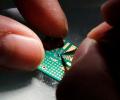
The Finance Ministry's expenditure department has approved a substantial Rs 1.25 lakh crore outlay for India Semiconductor Mission 2.0, significantly increasing the country's investment in global chip-making ambitions and aiming to establish India as a major semiconductor hub.
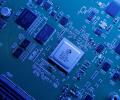
The Indian government has approved two major manufacturing initiatives worth nearly Rs 1.9 lakh crore (USD 22 billion) to expand the country's semiconductor ecosystem and scale up mobile phone production, aiming to strengthen its position as a global electronics manufacturing hub.

Union Finance Minister Nirmala Sitharaman has urged significant investment in AI infrastructure, semiconductors, and quantum technology, identifying them as India's next major growth frontiers. Speaking at an IIT Madras Alumni Association event, she emphasized the need to build hardware, skills, and institutional ecosystems to harness these technologies, countering perceptions that India is lagging in AI. Sitharaman also highlighted the potential for increased investment in defence production, particularly in unmanned systems and drones, stressing collaboration between academia and industry.

UST, a California-based technology company, highlights India's unique opportunity to build an AI-native semiconductor ecosystem, bypassing older models. Speaking at SEMICON India 2026, UST COO Gilroy Mathew emphasised India's advantage in investing in infrastructure and talent at the right time, enabling it to create AI-native manufacturing and supply chains for future competitiveness.
India is strategically positioned to develop a robust domestic semiconductor ecosystem, driven by increasing electronics consumption, strong government support through incentives, and a global shift in supply chains. Boston Consulting Group Managing Director Ankush Wadhera highlights India's potential as a safe haven for investments, with the AI boom further fuelling demand for advanced chips. The nation aims to expand its capabilities across the entire semiconductor value chain, attracting significant global and domestic investments.

Uttar Pradesh Chief Minister Yogi Adityanath announced the state's ambitious shift from mobile phone assembly to advanced microchip manufacturing, data centres, and artificial intelligence. He highlighted significant investments and growth in the digital economy, attributing the transformation to the "double-engine government's" alignment with national initiatives like 'Make in India' and 'Aatmanirbhar Bharat'. Adityanath also criticised previous administrations for hindering the state's potential.

IIT Madras is hosting the 3rd Digital India RISC-V (DIR-V) Symposium 2026 in partnership with the Ministry of Electronics and Information Technology and RISC-V International. The symposium aims to unite stakeholders from government, industry, and academia to advance India's semiconductor innovation, focusing on indigenous processor technologies, secure computing, hardware innovation, and AI, aligning with the government's vision for India as a global semiconductor hub.

Seven of the top 10 best-performing Indian smallcap stocks over the past year, linked to the US data centre boom and AI infrastructure, are now facing a valuation test as enthusiasm for AI investment shows signs of cooling on Wall Street. Analysts warn that the rally in these Indian counterparts may have left valuations increasingly stretched, with any pullback in US capital expenditure potentially weighing on their share prices.

Dr Dinesh Amalnerkar, president of the Maharashtra Academy of Sciences, has emphasised the need for Maharashtra to strengthen its semiconductor research and manufacturing ecosystem to compete with states like Gujarat and Telangana.
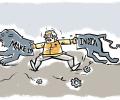
RRP Electronics and Orvis Semi Pvt Ltd have formed a strategic partnership to develop and manufacture low-light imaging sensors for defence, surveillance, and security in India. This collaboration aims to reduce reliance on imports and bolster India's semiconductor and defence electronics ecosystem under government initiatives like Make in India.

The US and India are collaborating to de-risk global supply chains for artificial intelligence technologies, particularly in semiconductor manufacturing and critical minerals processing. This partnership is facilitated through the US-led Pax Silica initiative, which aims to address over-concentration issues and single points of failure in supply chains, fostering a resilient global economy.

Finance Minister Nirmala Sitharaman on Sunday proposed to increase the outlay on electronics manufacturing to Rs 40,000 crore in the 2026-27 fiscal year.

Union Minister Ashwini Vaishnaw warned of increased global turbulence from tech disruptions, AI, and financial risks in the coming years. He stated that India is strengthening its economic and technological resilience to protect its growth from external shocks. India is focusing on domestic manufacturing and design in critical tech areas while maintaining global integration, with trust becoming as crucial as cost in supply chains.
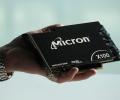
Prime Minister Narendra Modi is set to inaugurate a semiconductor plant in Sanand, Gujarat, and launch multiple development projects worth over Rs 20,000 crore, marking a significant boost to India's semiconductor industry and infrastructure.

The idea addresses an increasingly difficult problem on Earth: Data centres consume enormous amounts of electricity and water.

Foreign institutional investors have withdrawn nearly $40 billion from Indian equities in the last two years and, according to Bernstein analysts, have 'little reason' to invest for the long-term, though they may 'return to trade'. The brokerage highlights challenges such as struggling large-caps, disruption from new technologies, and difficulties accessing small- and mid-caps (SMIDs) at an institutional scale.

The Standing Committee on Information Technology will review 17 critical subjects, including social media regulation, AI safety, deepfakes, cybersecurity, and the semiconductor ecosystem, during 2026-27. This comprehensive review aims to address growing concerns around digital platforms, AI misuse, and infrastructure development, with India's cybersecurity agency already issuing warnings about AI-driven threats.

'Our research demonstrates the potential of perovskite-based semiconductor technologies for next-generation solar cells and memory devices.'

Artificial intelligence company Anthropic has officially launched its initial public offering (IPO) roadshow, aiming to raise up to USD 64.35 billion by offering 825 million shares at an expected price range of USD 70 to USD 78 per share. The company plans to list its Class A common stock on the Nasdaq Global Select Market under the ticker symbol 'ANT'.

Tata Sons Chairman N Chandrasekaran views the group's investment in semiconductors not as a short-term financial play, but as a critical long-term commitment to India's growth and self-reliance in a sector vital for domestic consumption and global supply chains.

Cisco Chairman and CEO Chuck Robbins announced plans to expand the company's silicon design team in India, citing the country's pro-growth strategy, scale, ambition, and engineering focus as key reasons for its strategic importance.

Chief Economic Advisor V Anantha Nageswaran stated that 2026 marks an inflection point for India, akin to 1991, necessitating the country to become globally indispensable in carefully chosen sectors to build strategic leverage for accessing geopolitically contested resources amidst a series of external shocks.

Prime Minister Narendra Modi's 76th birthday was celebrated during the inaugural session of SEMICON India 2026 at the Yashobhoomi Convention Centre. The event, focused on building India's semiconductor ecosystem, saw attendees extend warm wishes to the Prime Minister before his address.
Semiconductor startup C2i Semiconductors announced it has taped out a smart power stage chip designed for artificial intelligence infrastructure, marking a significant milestone for India's ambitions in domestic semiconductor production.

Indian equities, particularly the Nifty 50, have significantly underperformed their Asian and global counterparts over the past year, with the index down 10.6 per cent. This lag is attributed to factors like rising global oil prices, rupee depreciation, and a lack of participation in the global chipmaker rally that boosted markets like South Korea and Taiwan.
IBM Chairman and CEO Arvind Krishna details the company's substantial annual investment in India and its global USD 10 billion commitment to quantum computing over the next five years. He addresses the potential for AI to displace 10-20 per cent of jobs, particularly in the BPO sector, while also highlighting India's significant opportunity in the AI ecosystem. Krishna urges India to accelerate AI adoption, scale existing tech initiatives, and build its semiconductor manufacturing, advocating for a light-touch approach to AI regulation and emphasizing critical thinking in an AI-driven economy.

Mahindra Group's Bristlecone, a supply chain services provider, has reported a 24 per cent year-on-year topline growth and aims for a billion-dollar valuation. The company is expanding its offerings in AI, data analytics, and product engineering, focusing on resilient supply chains for global enterprises.
Prime Minister Narendra Modi inaugurated Micron Technology's semiconductor plant in Sanand, Gujarat, highlighting India's growing presence in the hardware sector and its strong partnership with the United States in AI and chip technologies.

US Secretary of State Marco Rubio visited Reliance Industries' Jamnagar refinery, a day after calling India a crude oil refining 'superpower', and met with top Indian business leaders Gautam Adani and N Chandrasekaran to advance bilateral ties in energy, trade, investment, and defence.
Senior Indian officials highlight the indispensable role of the private sector in translating India-US cooperation in AI, semiconductors, quantum technologies, and critical minerals into tangible outcomes. The collaboration aims to build trusted, resilient technology ecosystems and position India as a global electronics and semiconductor hub.

Bristlecone, a Mahindra Group company, reported a 24% year-on-year topline growth and aims for a billion-dollar valuation. The AI-powered supply chain services provider is expanding its offerings to include data analytics, AI, and product engineering, focusing on making supply chains more resilient for its global clients across high-tech, retail, manufacturing, and life sciences segments.

Electric vehicle (EV) sales in India are growing faster than the industry's ability to produce and deliver them, leading to supply shortages at dealerships during the peak festival season. This surge in demand is attributed to rising conventional fuel prices, making EVs a more attractive option for cost-conscious buyers.
JAKSON Group has appointed Ivan Saha as the Managing Director of its integrated Solar Manufacturing business. Saha, with over 31 years of experience in the semiconductor, solar, and sustainable energy sectors, will oversee technology, operations, and business growth, supporting JAKSON's expansion and backward integration plans in the solar value chain.
Atomic Energy Commission chairman Ajit Kumar Mohanty stated that India is on the verge of a significant technological transformation, driven by advancements in AI, quantum technologies, and other fields. Speaking at BIT Mesra's convocation, he emphasised the need for strong indigenous capabilities, skilled professionals, and interdisciplinary collaboration to achieve a developed India. Other speakers, including BIT Mesra's Chancellor and Vice Chancellor, echoed the importance of continuous learning and contributing to national progress.
